
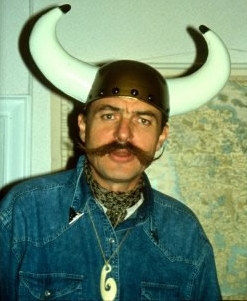
 Étienne Danchin
Directeur de Recherche émérite CNRS
Last update: June 2026
Researcher at:
Centre de Recherches sur la Cognition Animale (CRCA)
(Former co-head of the Labex TULIP (Tulip) from early 2011 to the end of 2019).
Address:
Centre de Recherches sur la Cognition Animale (CRCA),
Centre de Biologie Intégrative (CBI),
CNRS UMR 5169,
Université de Toulouse Midi-Pyrénées, 31062 Toulouse cedex 9. FRANCE
New email: etienne.danchin@utoulouse.fr
Research interest
Auto-replication is the essence of life. Reproduction implies the transmission of information across generations to allow the reconstruction of new individuals at every generation. Concepts of information are thus central to biology and in particular to the study of evolution. Today, the mainstream vision both among scientists and in the society, is that this trans-generationally transmitted information boils down to the sole information encoded in genes (ie in the DNA sequence).
However, many fields of biology provide evidence that this genocentric vision of life is no more tenable (Danchin et al. 2004, 2010, 2011, 2019a and b; Danchin 2021). Hence, biology is currently undergoing a profound mutation leading to the emergence of a new evolutionary synthesis to replace the current Modern Synthesis of Evolution that emerged in the middle of the 20th century when genetics merged with Darwinian natural selection approaches.
I advocate that if we are to integrate all known dimensions of inheritance, we may well do it thouroughly. This is why I propose to call the new synthesis the Inclusive Evolutionary Synthesis to flag its ambition of completness.
There are many forms of trans-generational information transfers. In particular, situations when information is extracted from older conspecifics (ie social learning) can trigger information transfers across generations, thus leading to Cultural inheritance (Danchin et al. 2004, 2010, 2011,2019a and b 2018; Danchin 2013). The essence of culture lies in the transmission of information across generations by purely social processes. Owing to several correcting processes such as conformity [ie the disproportionately likely adoption of the most common variant within the local population (Boyd & Richerson, 1985)] variation among population can be liably transmitted across generations. Such variation then meets the three conditions that trigger evolution through natural selection:
1- Variation (cultural variation),
2- There can be a link between cultural variants and the fitness of individuals bearing that variant (selective pressure, some behaviours are more likely to be tansmitted),
3- variants are inherited by offspring (that is vertically). Consequently, cultural variation is open to cultural evolution by cultural selection in the same way as genetic variation is open to evolution through natural selection.
My research mainly deals with non-genetic inheritance, as well as on the more specific case of cultural inheritance.
Keyword
Evolution, Ecology, Behavioural Ecology, Non-genetic inheritance, Mate choice, Habitat choice, Coloniality, Group living, Animal Culture. Experimental approaches.
Biological models
The kittiwake bird (Rissa tridactyla), and the fruit fly (Drosophila melanogaster).